
 By Yudvit Sehgal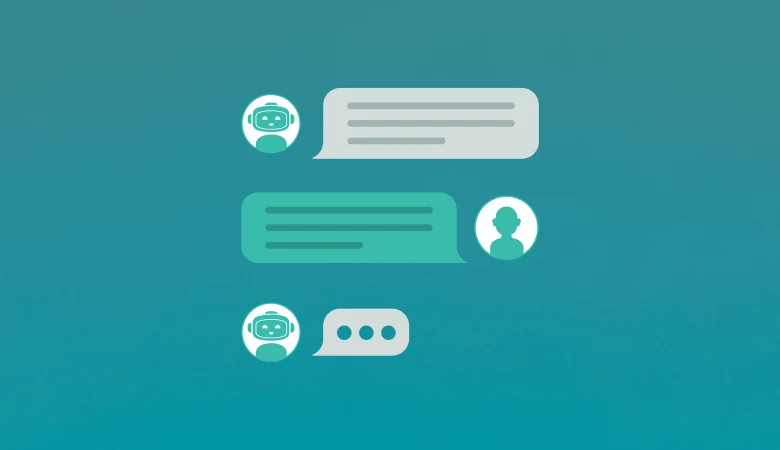
What are chatbots? They are software tools that let you talk to a computer through text or voice.
A chatbot can answer questions, share information, assist you through a task, or connect you with a human support team.
Today, chatbots are used on websites, mobile apps, messaging platforms, customer support systems, and many other digital services.
What Is a Chatbot?
Here is a better explanation about a chatbot:
A chatbot is a software application built to communicate with people through a conversation. The conversation can take place through text or voice.
Some basic bots follow fixed rules and show users a set of choices. More advanced systems can understand natural language and create replies based on the user’s request.
The idea is not new. Early systems used simple patterns and fixed replies. Modern systems are much more advanced because artificial intelligence, machine learning, natural language processing, and large language models can be used together.
However, it is important to remember that not every chatbot uses AI.
What are chatbots used for today? You may find them in online shopping, banking, travel, education, customer service, software support, and internal company systems.
For example, an online store may use a bot to help you check an order, find a product, or understand its return policy.
Why Are Chatbots Important for Businesses?
Chatbots can reduce the need for users to search through menus or wait for a support agent. A well designed system can answer common questions at any time and can handle many conversations at once.
For businesses, this can help minimise routine work and give support teams more time for complex cases.
The real value, however, relies on how the system is built. A bot that provides wrong answers can create more work instead of reducing it.
In my experience with digital products, the best chatbot is not the one that talks the most. It is the one that understands the user’s goal and provides a clear next step.
A Simple Example of a Chatbot
Imagine that you run an online health supplement store. A customer asks, “I ordered a multivitamin yesterday. When will it arrive?”
The chatbot identifies the request as an order tracking question. It checks the order system using the customer’s order details. It then gives the latest delivery status.
Now imagine that the customer asks, “The supplement box arrived damaged. I want a refund.”
This request may need a different process. The chatbot can collect the required details and explain the refund steps. If the case needs human review, it can transfer the conversation to a support agent.
This example shows an important point. A useful chatbot does not just produce text. It connects the conversation with the right information, rules, tools, and actions.
How Do Chatbots Work?
When you send a message, the system first gets your input. The message may then be processed to identify important words, meaning, intent, and context.
In an AI system, natural language understanding can help identify what you are trying to achieve.
For example, imagine that you type, “Where is my order?” The system may recognise this intention as an order tracking request. It can then check the order system, find the latest status, and return the information to you. If the request is outside its allowed task, it may send the conversation to a human agent.
In a generative AI system, the process can be more advanced. Your message may be sent to a large language model that uses the available context to create a response.
The system can also connect the model to company data, search tools, databases, or other software when the application is designed for that purpose.
What Technology Is Used in Chatbots?
Several technologies can work together inside a modern chatbot. Natural language processing (NLP) helps computers work with human language.

The Natural language understanding focuses on the meaning and intent of a request. Natural language generation helps generate a response that people can understand.
Machine learning is also important in many AI systems. It allows models to learn patterns from data during training.
Large language models have taken this field further by allowing applications to understand and generate natural language across many types of tasks.
Generative AI has changed chatbot design in a major way. Instead of choosing only from a small list of stored replies, a generative system can create a new response based on the user’s request and the information available to it.
This makes conversations more adaptable, but it also leads to a necessity for strong testing and controls.
What Are the Challenges of Chatbots?
Chatbots are not perfect. An AI system can misunderstand a request or generate an answer that sounds correct but is not supported by reliable information. This problem is often called a hallucination.
The risk becomes more important when a chatbot is used for sensitive areas such as finance, health, law, or account security.
In such cases, important information should be verified against trusted sources or reviewed by a qualified person.
Privacy is another important issue. Before using a chatbot, you should understand what information is collected, where it is stored, and how it is used. Businesses should also control access to private data and test their systems before giving them access to sensitive company information.
What Should You Check Before Using a Chatbot?
If you are planning to add a chatbot to your website or business, first identify the problem you want it to solve. Do not add one simply because AI is popular.
Start with common user questions. Check whether those questions have clear answers. Then decide whether a rule based system is enough or whether you need an AI system.
You should also test the chatbot with real questions, unclear requests, spelling errors, unusual wording, and requests outside its intended purpose.
A human fallback should be available when the system cannot safely help.
The most useful systems will be those that solve real problems without making the user work harder. Whether you are using a chatbot as a customer or creating one for your business, focus on the task, the quality of information, and the user’s experience rather than the technology alone.
Also Read: What is DevOps?